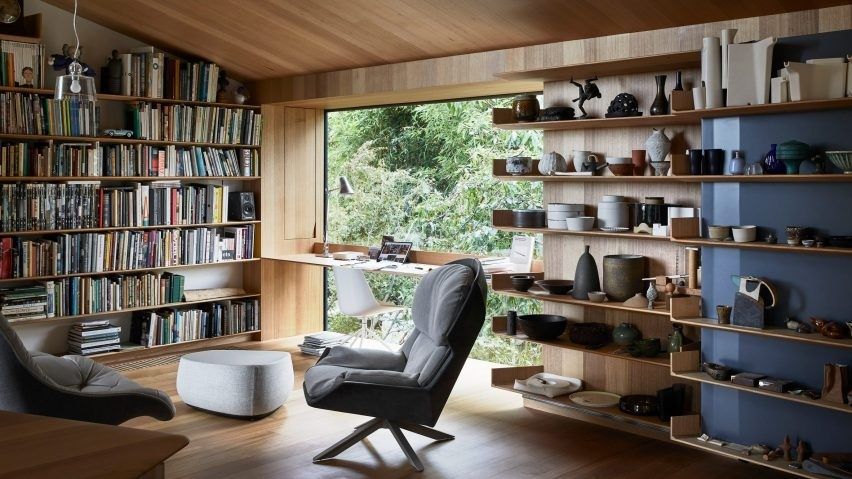
The Philosophy of the Intimate Home Library
A home library does not need to occupy an entire wall, fill several bookcases, or signal an impressive reading history. Its real value lies in the relationship between the books and the life around them. Mindless accumulation produces shelves crowded with abandoned intentions, duplicate interests, and titles kept mainly because removing them feels like admitting defeat. Conscious curation creates something different: a compact collection in which every volume has a reason to remain.
For urban dwellers, this distinction is especially practical. In a compact apartment, every shelf competes with storage, work, dining, and breathing room. Limited space can therefore become an editorial filter rather than a painful constraint. When paring down an overflowing collection to fit modest dimensions, prioritizing a curated lifestyle allows your physical space to breathe. The goal is not to own fewer books for its own sake, but to make room for the books that continue to inform, console, challenge, and delight you.
Deaccessioning Without Guilt or Regret
Many book collections are shaped by aspirational reading. A title is purchased because it represents the person you hope to become, the subject you intend to master, or the conversation you expect to have one day. Over time, unread books can begin to feel less like invitations and more like silent accusations. The shelf becomes a visible record of unfinished plans, creating guilt each time your attention passes over it.
The remedy is not to treat every unread book as disposable. Some unopened volumes deserve patience, particularly books connected to current study, professional work, or a genuine long-term interest. The useful question is whether the book still represents a living possibility. A title that has remained untouched through several changes of season, address, or preoccupation may be decorative deadweight. By contrast, a book that you repeatedly consult, recommend, lend with reluctance, or remember vividly has already demonstrated its place in your life.
A calm, structured review is more reliable than an emotional purge. Set aside a defined period, work shelf by shelf, and avoid turning the process into a judgment on your past self. A practical checklist can help:
- Would you read it again or consult it soon? Keep books that support recurring needs rather than vague intentions.
- Does it hold genuine emotional or personal meaning? A family inscription, a formative novel, or a book linked to an important period may earn space even if it is not frequently opened.
- Would you recommend it without qualification? If the answer is no, the book may not deserve permanent display.
- Is it replaceable? Public libraries, digital editions, and inexpensive secondhand copies can make temporary ownership unnecessary.
- Is the physical edition important? Durable binding, illustrations, typography, or marginalia may justify keeping a particular copy.
- Does it belong to the collection you want to maintain? A shelf should express your present priorities, not merely preserve every past impulse.
Books that do not pass the test can be sold, donated, exchanged, or given to someone who will use them. Place uncertain titles in a clearly marked holding box rather than returning them immediately to the shelf. If you do not seek one after three or six months, the decision becomes easier. This approach respects attachment while preventing indecision from consuming the space that a more meaningful collection could occupy.
Building an Enduring Core Collection
A small library works best when it is built around purpose rather than category alone. Begin by identifying what you want the shelf to do. It might preserve family and personal history, provide dependable reference material, support a creative practice, offer comfort after a difficult day, or keep unfamiliar ideas within reach. A personal library becomes more coherent when each acquisition answers one of these needs.
Thoughtful selection can transform a modest shelf into an intellectual sanctuary, reflecting the idea of a personal library as a deliberate expression of identity, memory, research, and pleasure described in research on personal libraries. The collection need not look scholarly or conventionally serious. A cookbook used every week, a volume of poetry opened during difficult periods, or a children”s classic retained for future family reading may be as central as a major work of philosophy.
Four foundational pillars provide a useful framework for deciding what belongs.
| Pillar | Purpose | Typical examples |
|---|---|---|
| Reference | Supports recurring questions and practical work | Dictionary, atlas, style guide, specialist manual |
| Comfort | Offers familiarity, emotional steadiness, and rereading | Beloved novels, poetry, essays, spiritual or reflective texts |
| Inspiration | Encourages imagination, making, and new ways of seeing | Art books, design books, biographies, creative guides |
| Discovery | Preserves curiosity and introduces unfamiliar perspectives | Translated fiction, history, science, criticism, emerging writers |
Different categories also have different patterns of longevity. Reference books can remain useful for years when the subject is stable, although rapidly changing fields may be better served by digital resources. Literary classics often reward rereading, while contemporary fiction may have strong immediate value but less lasting appeal. Art and design books can function as visual objects as well as sources of ideas, yet their size requires careful space planning. Periodicals, trend-driven guides, and annual editions generally have shorter shelf lives. Recognizing this difference prevents temporary usefulness from becoming permanent crowding.
Spatial Tactics for Displaying Books in Compact Quarters
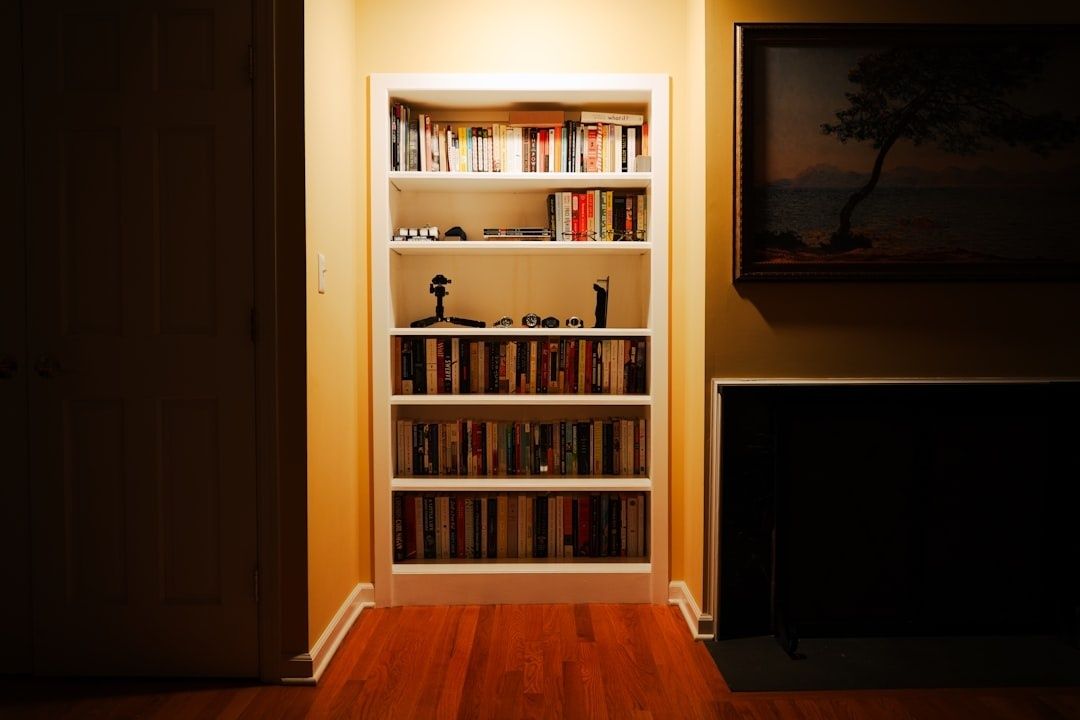
Small-space shelving should use neglected vertical and transitional areas without making the room feel like storage. Narrow shelves above a desk, a short run along a hallway, or a shallow ledge beneath a window can hold a meaningful number of books while preserving floor area. Recessed alcoves are particularly valuable because they create a natural boundary. Floating ledges can work well for selected paperbacks, small art books, or front-facing displays, provided they are securely installed and not overloaded.
In a multi-use room, books should be integrated into the existing visual language rather than isolated as a separate obstacle. A low bookcase can double as a room divider, bedside storage, or a surface for a lamp and framed print. A narrow cabinet may hold less attractive reference materials behind doors while leaving favorite titles visible. Open shelving, baskets, and containers are also useful in shared rooms because they make frequently used materials accessible while allowing less attractive or seasonal items to be put away, a principle also applied in small-space organization.
- Use height carefully. Place infrequently consulted books on upper shelves and keep daily reading at eye level or within easy reach.
- Measure before buying. Record wall width, shelf depth, ceiling height, and the clearance required for doors, windows, and walkways.
- Mix orientation. Combine upright rows with a few horizontal stacks to create visual rhythm and provide natural bookends.
- Group by use or mood. A practical arrangement might place current reading, reference, and comfort books in separate zones.
- Limit visual noise. Leave small areas of breathing room rather than filling every shelf edge to edge.
- Protect the collection. Keep books away from persistent damp, direct sunlight, radiators, and unstable piles that can damage bindings.
Visual rhythm matters because a small library is both a working resource and a piece of the room. Uniform rows can feel orderly but rigid; too many stacks can look accidental and make titles difficult to retrieve. A balanced shelf might feature a run of upright spines, a modest horizontal pile of current books, and one or two objects that provide scale without turning the arrangement into a display case. The best storage solution is the one that makes reading easy while allowing the rest of the room to remain calm.
Establishing a Sustainable One In One Out Rhythm
Even a carefully edited library can expand quietly. A new book arrives after a recommendation, then another is purchased for a holiday, and soon the shelf is once again under pressure. A one in, one out rhythm prevents this gradual creep. It does not require rigid arithmetic for every single purchase, but it establishes a clear principle: new ownership must be balanced by an honest reassessment of existing ownership.
Seasonal audits are particularly effective. Four times a year, review books that have been finished, abandoned, borrowed, or left untouched. Rotate a small selection into active reading and remove titles that no longer serve the collection. Public libraries, interlibrary loans, audiobooks, and digital editions can support wide-ranging curiosity without demanding permanent physical space. Physical copies can then be reserved for books that deserve repeated contact, offer lasting reference value, or carry a material quality that digital formats cannot replace.
- Keep a short list of books to borrow before buying.
- Use a waiting period for nonessential purchases, especially during sales.
- Store seasonal or specialist books separately from the core shelf.
- Maintain a donation or exchange box so departures are easy.
- Review duplicate editions and keep the copy with the greatest practical or sentimental value.
- Allow the library to change as interests, responsibilities, and living arrangements change.
A personal bookshelf is not a monument that must preserve every stage of a life indefinitely. It is a living space, shaped by current needs and revised through experience. Rotation keeps familiar books visible, creates room for discovery, and ensures that the collection remains connected to the reader rather than to an abstract ideal of completeness.
Cultivating Your Personal Literary Sanctuary
A focused library can offer more than a crowded room of books. It can hold the works that clarify a recurring question, reopen a trusted path into imagination, preserve a meaningful relationship, or make a difficult evening gentler. In a compact home, every volume has the opportunity to be noticed and used. That intimacy gives the collection a richness that scale alone cannot provide.
Begin with one shelf, not the entire apartment. Remove the books that no longer belong, identify the volumes that genuinely support your life, and arrange them so they are easy to reach and pleasing to see. Physical limits do not diminish a reader”s intellectual life; they sharpen taste, encourage intentional ownership, and deepen the connection between books and home. Over time, one carefully considered shelf can become the foundation of a literary sanctuary that feels spacious in every sense that matters.