
The Invisible Engineering of Literary Suspense
Narrative tension is often described as an atmosphere, a feeling of unease that seems to arise from voice, character, or subject matter. In practice, however, suspense is also an architectural craft. A writer determines how quickly information arrives, how long a character remains exposed to danger, when a scene ends, and how much physical or psychological space remains available for escape. These decisions shape the reader”s attention before the reader consciously notices them. For authors, editors, and analytical readers, this means tension can be studied as a system rather than treated as an elusive gift.
Classic novelists worked across several structural levels at once. At the smallest scale, syntax and punctuation controlled the speed of perception. At the scene level, dramatized action alternated with compressed narration to regulate pressure. At the largest scale, chapters, locations, and recurring plot strands created patterns of delay and revelation. A useful way to examine these mechanics is to study thoughtful literary craft as an interaction between sentence cadence, scene-to-summary ratios, spatial restriction, and physical white space. Together, these elements control not only what readers know, but also how urgently they feel compelled to continue.
Sentence Cadence and the Micro-Mechanics of Urgency
Sentence structure alters the reader”s cognitive processing speed. A long sentence with several subordinate clauses asks the mind to hold information in suspension, while a short sentence delivers a discrete unit of perception almost immediately. Neither form is inherently more dramatic. The effect depends on placement. A sequence of clipped sentences can imitate shock, panic, or rapid physical action. A prolonged periodic sentence can make the reader wait for its grammatical completion, creating pressure through delayed certainty.
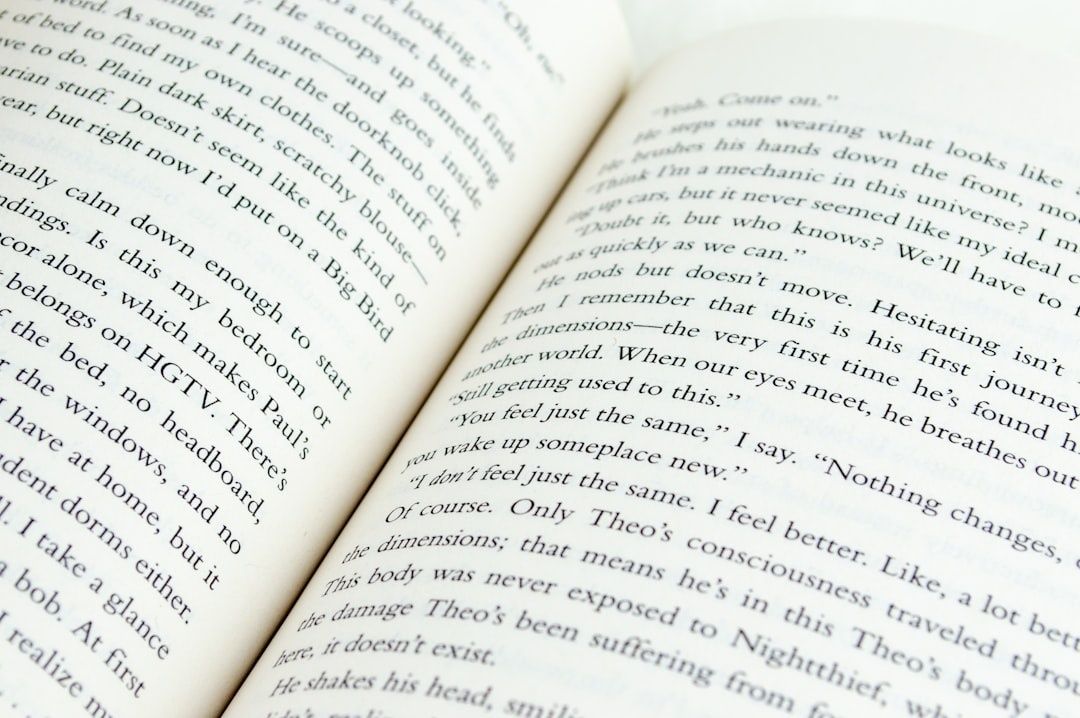
Consider the difference between describing a door as opening and rendering the moment through incremental syntax. A character hears a key. The lock turns. The handle moves. The door opens. Each sentence becomes a small beat, and each beat postpones the next piece of information. In a sustained emergency, fragments and simple declarative sentences compress perceived time because they resemble successive observations. By contrast, a long sentence can stretch a single instant, especially when the reader must travel through qualifications before reaching the main verb or final revelation.
Classic prose also uses accumulation to create psychological pressure. Polysyndeton, the repeated use of conjunctions, can make events feel relentless: the character runs and stumbles and rises and hears the footsteps behind him. The repeated “and” gives the passage no comfortable resting point. Periodic sentences produce a different form of tension by postponing the governing clause until the end. The reader moves through conditions, images, and qualifications while waiting to learn what happened. These techniques work best when supported by precise verbs and restrained description. As sentence-level revision principles, consider the following:
- Use short sentences at moments when perception should feel immediate or fractured.
- Use longer sentences when delay, uncertainty, or accumulating detail is the source of pressure.
- Replace vague intensifiers such as “very,” “really,” and “extremely” with a stronger verb or a concrete physical detail.
- Remove redundant phrases that interrupt momentum without adding character, setting, or consequence.
- Read tense passages aloud and listen for unintended pauses, monotonous openings, or a rhythm that resolves too comfortably.
Restraint matters because urgency is weakened when every line announces its importance. Decorative adverbs and intensifiers often explain an emotion that the action should already communicate. “She ran desperately” is less forceful than a sequence of specific choices, such as missing the latch, abandoning the bag, and hearing the stair below creak. As Julie Gray observes in her discussion of tension and structural rhythm, pressure should rise through connected obstacles rather than appear as isolated bursts. Sentence cadence is the local rhythm of that larger progression, and each sentence should help carry the reader toward the next.
Calibrating Scene and Summary to Control Dramatic Pressure
Scene and summary perform different structural jobs. Scene places the reader inside a specific moment, where characters pursue goals, encounter obstacles, make choices, and suffer consequences. Summary compresses time, bridges locations, supplies context, and moves the narrative past material that does not require dramatization. A frequently useful working ratio is the ninety-percent scene rule, which treats most of a novel as immediate dramatic experience. It is not a law, and literary forms vary widely, but it offers a practical diagnostic. If a draft contains long stretches of explanation with little embodied action, tension may be dissipating before the reader has a reason to worry.
A scene generates pressure because the reader can track change moment by moment. A character enters a room seeking an answer, discovers that a witness has disappeared, and leaves with a misleading clue. The goal, obstacle, decision, and consequence are visible. Summary, by contrast, acts as a pressure valve. It can carry a protagonist across three uneventful days, condense a family history, or move the story from one strategic location to another without forcing the reader to experience every transition. Used carefully, compression protects the important scenes from being diluted by routine.
| Structural choice | Primary effect | Best use |
|---|---|---|
| Fully dramatized scene | Slows perceived time and increases immersion | Confrontations, discoveries, irreversible decisions, and physical danger |
| Focused summary | Accelerates chronology and reduces narrative fatigue | Travel, repeated routine, backstory, and transitions between major events |
| Scene with selective summary | Maintains immediacy while skipping low-pressure intervals | Investigations, negotiations, and sequences with changing levels of risk |
| Summary interrupted by sensory detail | Creates a warning signal inside compressed narration | Foreshadowing, memory, and the sudden emergence of danger |
The key question is not whether a passage is scenic or summarized, but whether its level of detail matches its dramatic function. A quiet passage may deserve rich scene treatment if it establishes a relationship that will later fracture. Conversely, an apparent action sequence may become tedious if every movement receives equal attention. The structural model described through the concepts of Desire, Obstacle, and Destination offers another useful test. Each scene or fragment should clarify what is wanted, what resists that desire, and how the passage moves toward or away from an eventual endpoint. During revision, mark these three elements in every scene. Where none is present, summary may be more appropriate. Where all three collide, the moment probably deserves dramatic space.
Strong pacing is therefore an alternation of pressure and release, not a continuous acceleration. A tense scene can be followed by a quieter passage, provided the quieter material introduces a complication, changes the reader”s interpretation, or deepens the cost of the next decision. The pause should refresh attention without restoring safety. This is why chapter length alone cannot determine pace. A short chapter may feel slow if it contains no meaningful change, while a long chapter can move rapidly when each scene creates a new problem.
Architectural Geography and Spatial Constriction
Setting becomes a pacing mechanism when it changes what characters can do. A narrow corridor, isolated house, stalled elevator, mountain pass, or border checkpoint is not merely a visual backdrop. It determines movement, visibility, access to help, and the number of possible choices. In thriller fiction, location changes can accelerate the narrative by creating pursuit and transition, while detailed description can slow it by asking the reader to orient themselves within a complex environment. The most effective settings do both: they provide enough information to maintain clarity, then use that clarity to make the next restriction more alarming.
Alfred Hitchcock”s films offer a particularly clear model of architectural suspense. Doors, windows, staircases, hallways, and doorknobs become instruments of anticipation because they imply something beyond the frame. A door can conceal a threat, delay an escape, or force a character to choose whether to enter. Edgar Allan Poe”s House of Usher similarly operates as more than a location. Its decay reflects the family”s disintegration, turning physical architecture into psychological evidence. For fiction writers, the lesson is practical: a setting gains power when its design expresses the conflict and actively alters the available action.
- Begin with an environment that gives the character several apparent options.
- Remove or compromise those options as the scene develops.
- Use thresholds, stairways, locked rooms, narrow passages, and obstructed sightlines to control disclosure.
- Allow the character”s understanding of the space to change, so a familiar room becomes threatening or a promising exit proves unusable.
- Balance orientation with description. Readers need enough geography to imagine the danger, but not so much that the action loses momentum.
Spatial constriction can operate at a broader scale as well. A novel may begin with open roads and expanding possibilities, then move toward enclosed rooms, guarded borders, hostile institutions, or a shrinking circle of trusted people. The physical narrowing mirrors the character”s increasing stakes. Research on place and pace in thrillers emphasizes that quiet, richly described passages can make later action feel sharper by giving the reader a stable baseline. The contrast is essential. If every location is frantic, no location feels urgent. A calm room can be more disturbing than a chase when the reader understands that escape is becoming impossible.
During revision, draw a simple map of the major settings and note what each location permits, conceals, and prevents. Then track whether movement between locations changes the story or merely relocates it. A setting should ideally create a new tactical problem, reveal a new social pressure, or alter the character”s sense of identity. When geography performs that work, pacing becomes tangible. The plot does not simply happen in space; space helps cause it.
The Strategic Cliffhanger and White-Space Architecture
A chapter break creates a small unclosed cognitive loop. The reader reaches the edge of a unit, pauses physically, and carries an unanswered question into the next page. That question may concern immediate danger, a character”s decision, a withheld explanation, or the meaning of a newly discovered fact. The most effective cliffhangers do not merely stop at a loud event. They interrupt a developing pattern at the moment when the reader has enough information to anticipate consequences but not enough to resolve them.
White space strengthens this effect by enforcing a pause outside the prose itself. A blank line, section break, or new chapter gives the reader a moment to form an interpretation. That pause can heighten suspense, but it can also create irony. The reader may understand the danger before the character does, or may be forced to reconsider the preceding scene before receiving clarification. Chapter length contributes to this architecture because short units encourage frequent stopping points, while longer units allow tension to accumulate through several reversals. Neither approach is automatically superior. The right break occurs when the emotional or informational unit has reached maximum productive incompleteness.
One of the most reliable ways to design breaks is to track recurring plot strands. Suspense grows when a strand returns often enough to remain active, but not so often that its outcome becomes predictable. Rowling”s outline method, as discussed in analysis of her book architecture, used columns to follow recurring series across chapters. Repetition with variation allowed suspense, surprise, and shock to emerge from structure rather than from arbitrary twists. The same principle can be adapted to any novel with parallel characters, mysteries, relationships, or thematic patterns.
- List the major narrative strands, such as the investigation, the family conflict, the romance, or the external threat.
- Mark every chapter in which each strand appears, develops, disappears, or changes meaning.
- Identify what the reader knows at each return, and what remains withheld.
- Place a chapter break after a meaningful escalation, not simply after a convenient page count.
- Hand off attention to another strand only when the interruption increases curiosity about the strand left behind.
A good handoff creates two forms of momentum at once. The new section must be engaging on its own terms, while the absent strand continues to exert pressure in the reader”s mind. This technique is especially useful in mystery and ensemble fiction, where the reader”s attention moves among several unresolved questions. The break should not feel like avoidance. It should feel like a deliberate redistribution of tension. As with sentence rhythm, the test is simple: after the break, does the reader have a specific reason to continue?
Applying the Master Pacing Framework to Modern Manuscripts
Classic structural principles remain useful because they address how attention works, not because contemporary fiction must imitate an older style. During revision, conduct a rhythm audit at three levels. At the line level, read for sentence length, verb strength, punctuation, and unnecessary intensifiers. At the scene level, identify the character”s desire, the obstacle, the choice, and the consequence. At the chapter level, examine where information is withheld, where plot strands are handed off, and whether the final paragraph creates productive incompleteness.
- Line audit: underline short sentences, long periodic sentences, fragments, and repeated syntactic openings.
- Scene audit: mark every goal, obstruction, escalation, reversal, and consequence.
- Geography audit: note how each location changes movement, visibility, access, and risk.
- Summary audit: compress routine passages and expand moments where a decision or discovery changes the story.
- Chapter audit: test every break for a clear unanswered question or altered expectation.
This process turns pacing from an impression into an editable design problem. Passive exposition explains what has happened, but immersive storytelling makes the reader experience what may happen next. The difference is created through controlled delay, meaningful movement, calibrated compression, and carefully placed pauses. When sentence cadence, scene proportion, spatial design, and chapter architecture work together, tension no longer depends on constant spectacle. It becomes a steady structural force, guiding the reader forward with the quiet certainty that the next moment will matter.